After ten years in Britain, the country has become my second home. I now divide most of my time between Oxford and London. Oxford carries my academic life, while London brings me close to the commercial world and to society as it actually works. The two cities correspond almost exactly to my two most important identities, researcher and investor.
What draws me to Oxford has never been the length of its history but the concentration here of some of the best demographers, sociologists and social scientists in the world. For anyone interested in empirical social science, Nuffield College, Oxford, offers an environment that is close to irreplaceable. It has also allowed me to meet names that had previously appeared only in my bibliographies, among them the sociologist John H. Goldthorpe (CBE, FBA, Emeritus Fellow of the College), author of the class schema, and Sir David Cox (1924-2022), who devised the Cox proportional hazards model and served as Warden of the College.

My greatest gains have come from daily conversation rather than from the classroom. Researchers at the College made me think seriously, for the first time, about something entirely obvious, namely that data are gathered by people. They carried out a study examining more than a hundred rounds of international household surveys across dozens of countries, the very data used worldwide to estimate fertility and to assess development goals. Enumerators are paid a fixed daily wage and are judged by how many households they get through in a day, while women and men of eligible age each require twenty minutes or more of extra questioning. The result is unsurprising. Such people frequently fail to appear on the roster. Either their ages are altered so that they no longer qualify, or they are never written down at all. Those who vanish are not a random selection. They are the youngest, the most marginal, the ones whose membership of the household is hardest to pin down. Fertility in Africa is therefore systematically overstated and its decline understated, and these are the figures on which governments base population and education policy. This changed the way I read data. We are used to setting the quantitative against the qualitative, yet every number must pass through an entirely qualitative process before it becomes a number, that is, who does the asking, how they ask, how tired they are that day, and whether leaving one person out carries any cost at all. The credibility of a dataset rests in the end on the most exhausted person in that chain. So I have come to think that a good researcher must first be able to ask where the data came from, rather than rushing to use them to answer a question.

Oxford’s dense academic atmosphere has also more than satisfied my curiosity. There are public lectures here every day, covering almost every discipline. From demography, economics and sociology to history, philosophy, neuroscience, artificial intelligence and even physics, one can hear the latest research from a different field on any given day. I do not stay away from these lectures merely because I am not a specialist. On the contrary, I am increasingly convinced that a person’s understanding of the world comes from the intersection of different disciplines rather than from the steady accumulation of knowledge within a single one. A historian’s argument often helps me see why an institution took the form it did, a neuroscientist’s research makes me rethink how people decide, and a physicist’s discussion of complex systems sends me back to the question of causation in social science.
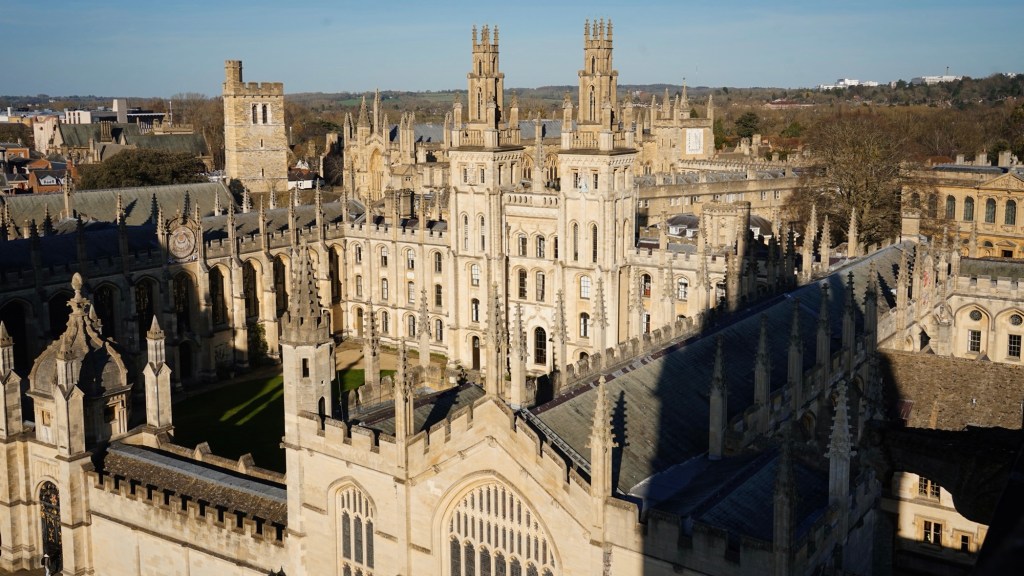
The Oxford Union is another of the places I go to most often. Founded in 1823 and now more than two centuries old, the debating society is less a student club than a platform connecting public life with the world of ideas. I have heard Sarah Friar, the chief financial officer of OpenAI, on the artificial intelligence industry, Paul Graham, the founder of Y Combinator, on how startups change the world, and Jimmy Wales, the co-founder of Wikipedia, looking back on the open knowledge movement. I would rather watch how such people handle challenges in the room than read about them in the press. What has struck me most is that, when they explain their key decisions, the reasons they give are far cruder than the accounts written afterwards. They knew less at the time than anyone retelling the story today. Understanding that matters more than knowing how things turned out.
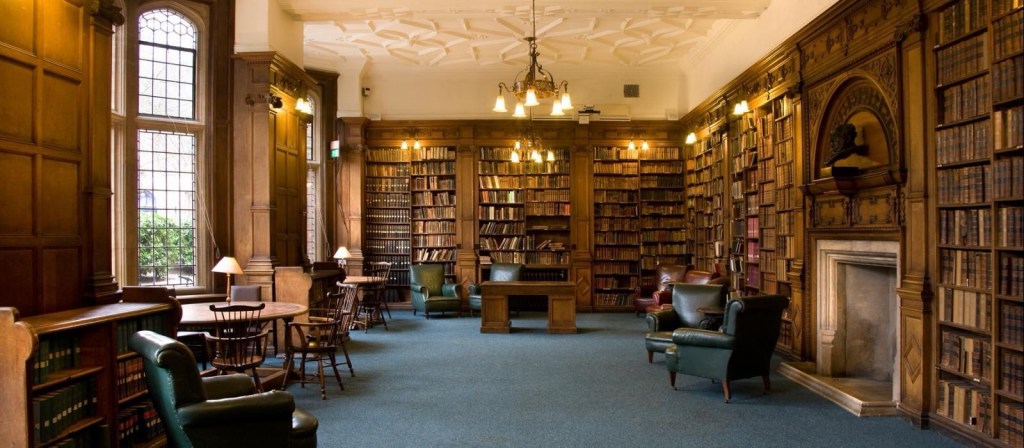
London offers a different vantage point. Here I meet investors, entrepreneurs, lawyers, data scientists and people from the public sector. What is interesting is that the more thoroughly globalised the city, the more I notice that what really shapes a person is intensely local. Among investors, those of German origin often show something close to an instinctive wariness of leverage, which owes less to personal experience than to a domestic financial system dominated by banks. Among entrepreneurs, people from different cultural backgrounds hold almost opposite default assumptions about how far authority should be delegated within an organisation. Globalisation has not erased these differences but has merely allowed them to meet in a single space. What makes London distinctive is not that it is sufficiently international but that it gathers together locals from every part of the world. London is also the best window on capital markets, particularly for traders in commodities, government bonds and currencies (who now go by the far grander name of global macro hedge funds). I would rather talk directly to the people inside these markets, because much of what they judge never reaches print.
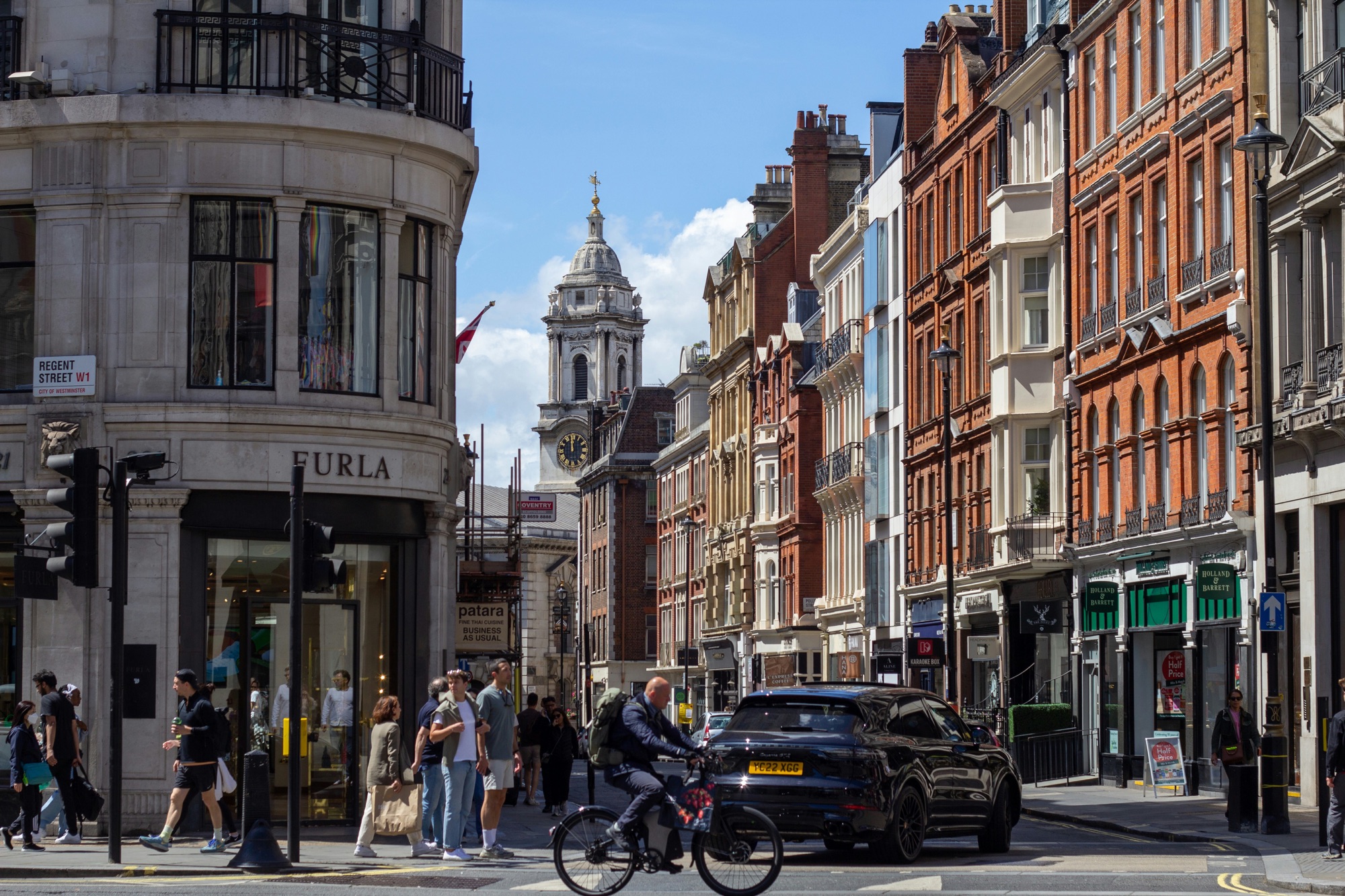
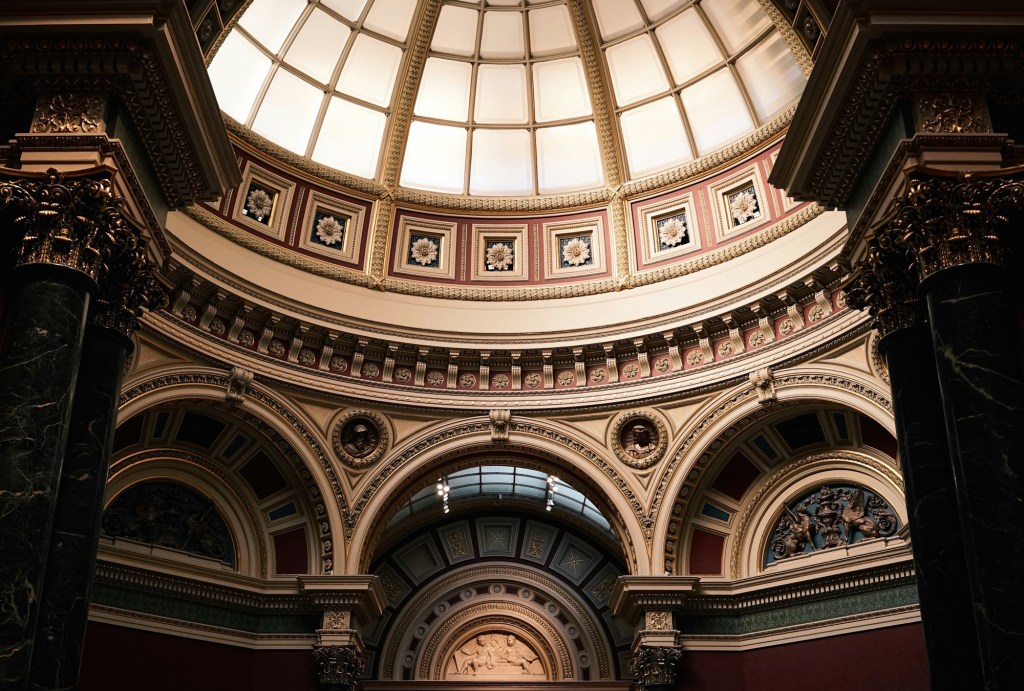
I am also a regular at London’s museums, of which my favourites are the National Gallery and the British Museum.
The National Gallery holds a large collection of European painting from the Renaissance to the Impressionists. I look at these pictures as art history and social history rather than as a matter of technique. I like to linger, for instance, in the Central Hall, which is now given over to full-length portraiture from 1550 to 1900. Six of the works hanging together form something close to a testable sequence. In 1691 Mignard painted the newly widowed Marquise de Seignelay as the sea goddess Thetis, with her eldest son dressed as Achilles. The shells and coral at her feet point to her late husband’s post in the French royal navy, and the costly ultramarine is itself a declaration of wealth. To say who she was, she needed mythology and an office of state. Van Dyck’s Balbi children wear miniature versions of adult dress, announcing the standing of a Genoese banking family. Honthorst’s Elizabeth Stuart, painted in 1642, shows a woman who had by then been in exile in The Hague for more than twenty years. The kingdom was long gone, yet the portrait still follows the conventions due to a queen. A title, it turns out, can survive entirely apart from actual power. By 1763 Drouais’s Madame de Pompadour is no longer a goddess but a woman seated at her embroidery frame, surrounded by books. The justification offered for a royal mistress had shifted from myth to diligence and cultivation. Delacroix’s Schwiter of 1826 was a private commission, and what the picture conveys is bearing rather than office. Manet’s Eva Gonzalès of 1870 shows a woman painter at work at her own easel. Portraits from different periods record not only what a person looked like but also how an age understood power, wealth and identity.
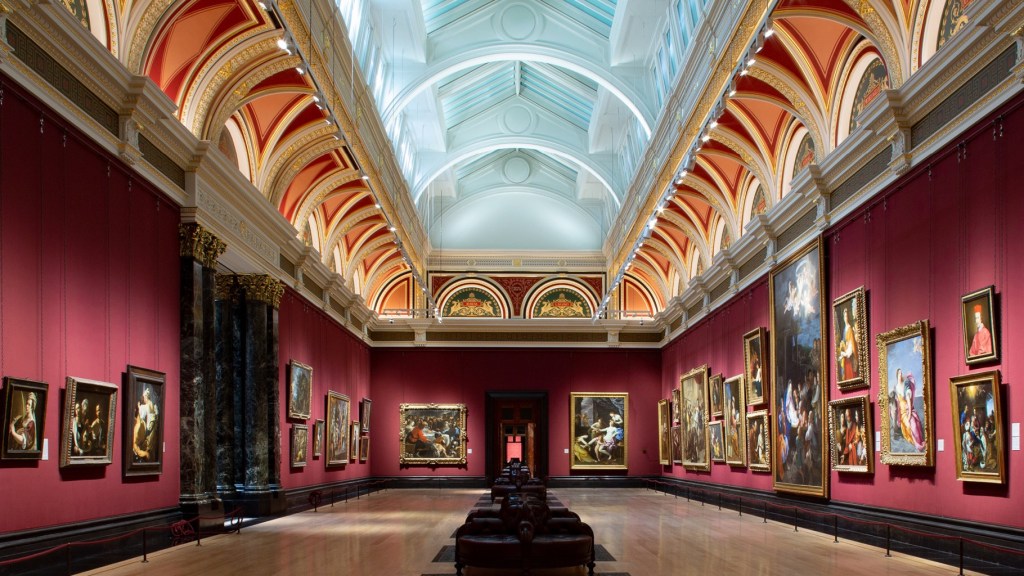
From Thetis to the easel is a span of less than two centuries. What changed was not taste but the answer to the question of what makes a person’s position appear legitimate. It moved from blood, court office and myth to cultivation, and finally to work itself. This is the same question that the literature on social stratification takes up. Only the medium of record differs, one being canvas and the other data.
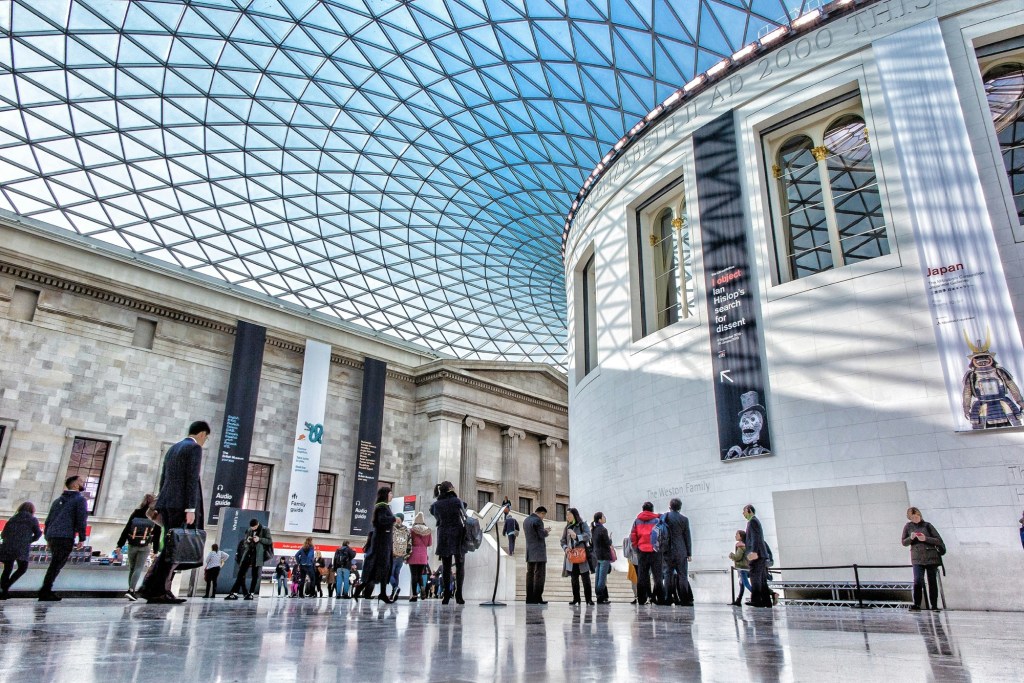
The British Museum is more like a compressed history of civilisation. I go most often to the Egyptian galleries. People usually marvel at the scale of the pyramids and temples, and infer from it that ancient Egypt possessed a powerful central organising apparatus. The more accurate picture is asymmetric. Butzer’s reconstruction of Nile irrigation shows that Egypt’s basin irrigation was largely maintained locally and required no national hydraulic bureaucracy, so Wittfogel’s hydraulic society thesis does not hold for Egypt. Excavation of the workers’ settlement at Giza, by contrast, shows that the pyramid sites relied on paid labour working in rotation, a steady grain ration and administrative coordination sustained across decades. The same state was decentralised in agriculture and centralised in monumental construction. What deserves explanation is not organisational strength but this selective concentration, that is, where a state chose to spend its scarce capacity to coordinate.
Of all the Egyptian holdings, the Rosetta Stone still attracts me most. As someone interested in how information travels, I regard it as a successful decoding experiment. The stone carries hieroglyphic, demotic and ancient Greek text together, which amounts to a parallel corpus. What deserves notice, though, is that this single parallel text was not enough to crack the script. Champollion also drew on Thomas Young’s earlier work on demotic and on cartouches, on a second set of comparisons supplied by the bilingual obelisk inscription that Bankes brought back from Philae, and on his own command of Coptic, a language that preserved the sounds of ancient Egyptian and so allowed the signs to be matched to real pronunciation rather than to concepts alone. Decoding, in other words, requires not one table of equivalents but several mutually independent sources that can be checked against each other. The same holds when reading any body of data today. The consequences were enormous. As the script became legible again, a mass of inscriptions, administrative papers and tax records re-entered the stock of human knowledge. Once a civilisation loses the ability to read its own language, it has lost its history.
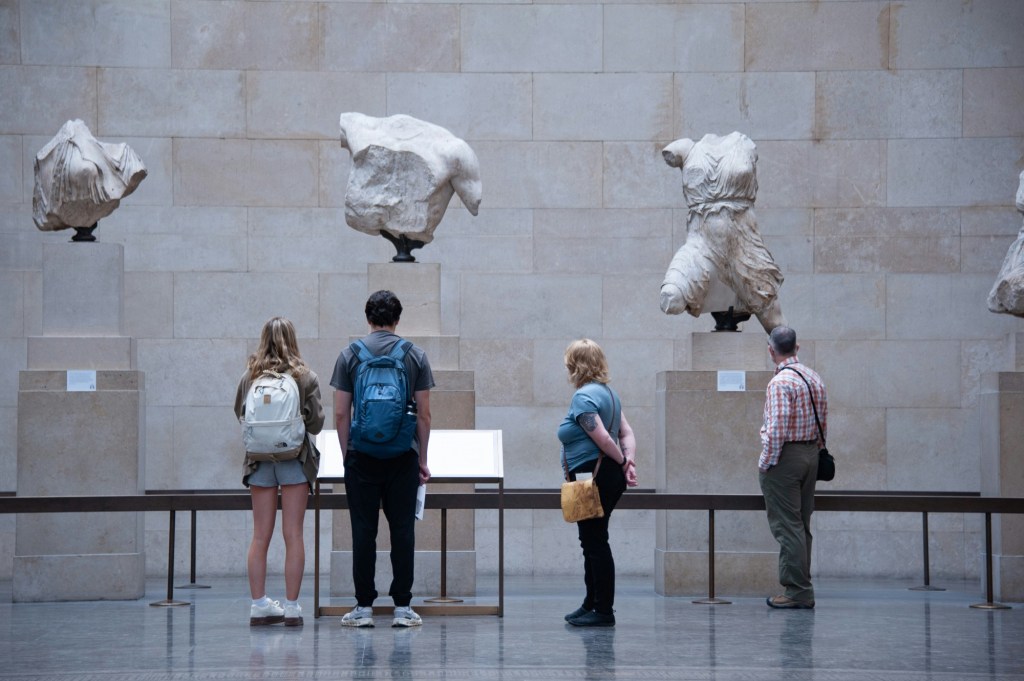
Walking on into the Mesopotamian, Greek and Roman and Chinese galleries, I set these civilisations side by side. Their paths differ, yet almost all of them had to answer the same questions about how to organise a population, build institutions, levy taxes and maintain order. For me these museums are not tourist sites but open archives, putting in front of me what could otherwise only be read about in books.
 Haohao Léi